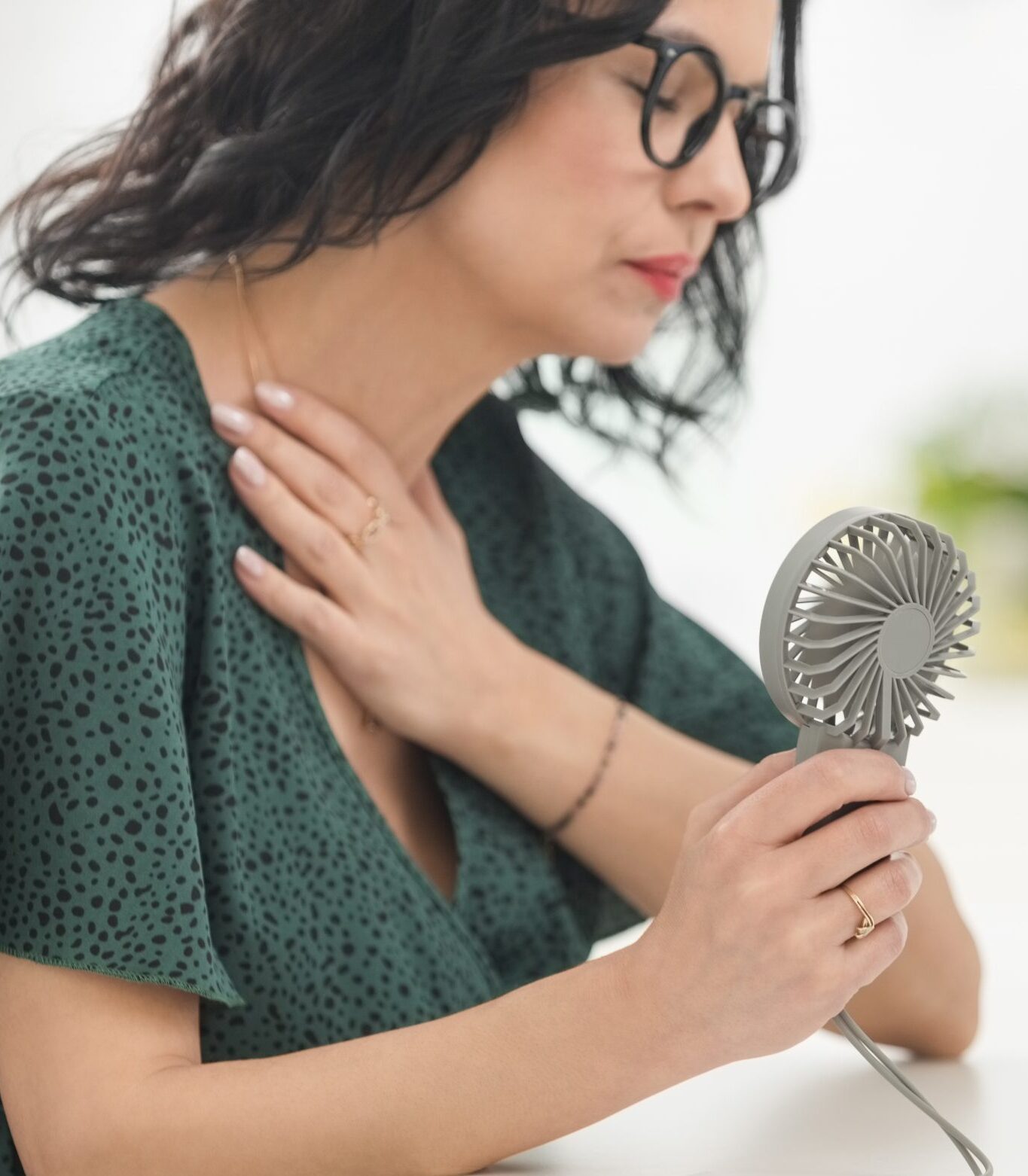
Understanding Hot Flashes
- Hot flashes are linked to declining estrogen, which affects the brain’s temperature control center and triggers sudden warmth and sweating.
- Dr. Stephanie McNally, Medical Director for the Katz Institute for Women’s Health at Northwell Health in New York, explains that these symptoms can range from mild warmth to intense episodes and may be influenced by stress, diet, caffeine, and alcohol.
- Treatment options include lifestyle approaches, therapy, medications like SSRIs/SNRIs, and newer non-hormonal drugs targeting brain pathways.
If you’ve felt a rush of heat and sweating that seems to come out of nowhere, know that you’re not alone. Dr. Stephanie McNally, Medical Director for the Katz Institute for Women’s Health at Northwell Health, tells SurvivorNet that hot flashes—a common menopausal symptom—occur when declining estrogen levels affect the brain’s temperature control system, causing sudden waves of warmth and perspiration.
Hot Flashes Explained
Dr. McNally explains, “So a hot flash, this vasomotor symptom (VMS) is where the decline of estrogen in your thermo regulation center, basically your temperature centers in your hypothalamus, in your brain.” Read MoreNoting how there are variations of how a woman’s brain triggers the vasomotor symptom, she explained the following things could lead to hot flashes, aside from the decline in estrogen:
- stress response
- spicy foods
- caffeine
- alcohol
“All of these factors are actually things because it’s affecting the neurochemicals in our brain that interact with that temperature center that actually can amplify and make your hot flashes, your vasomotor symptoms worse,” says Dr. McNally.
Treatment Options: From Lifestyle to New Therapies
As for targeted interventions for vasomotor symptoms, Dr. McNally says there are several approaches.
“We can do everything from a holistic approach where there’s literature to show that maybe things like acupuncture or cognitive behavioral therapy can be very effective to hormonal interventions, which is the gold standard,” she notes. “And I use the word gold standard with an asterisk, especially for your patients who have gone through cancer, because hormonal therapy needs to be individualized in a personalized approach because some women can or cannot be on something systemic.”
“There are SSRIs [Selective Serotonin Reuptake Inhibitors] and SNRIs [Serotonin and Norepinephrine Reuptake Inhibitors],” she explains. “So behavioral health medications are effective to help because again, we’re going to the top with all those neurochemical changes, they can be effective.
Additionally, Dr. McNally emphasized the wide range of available treatments for vasomotor symptoms, highlighting newer medications that act on neurokinin receptors in the brain. These therapies can reduce hot flashes by more than 80–90% in women who are unable to use hormone therapy.
How Dr. McNally Helps Women Navigate Menopause
“I’ve changed my practice [based] on how I ask questions do it in an open-ended manner, but also the way that I kind of ran through things with you and we did it quickly. Do you sleep? Do you have hot flashes? Do you have libido concerns?
“There’s something called the menopause quick six. It’s an easy tool that a patient can come in powered with some really good questions if their clinician is not asking them. So that’s a way for me to educate my team members to say, you’ve got to ask all of these pieces to a woman to get to her symptoms.”
The Menopause Quick 6 [MQ6] questionnaire she’s referring to asks the following questions:
- Periods: Have you noticed any changes in your menstrual cycle?
- Hot Flashes: Are you experiencing hot flashes or night sweats?
- Vaginal Health: Do you have any vaginal dryness, pain or sexual concerns?
- Bladder Issues: Have you experienced any leakage (incontinence) or bladder control problems?
- Sleep: How is your sleep?
- Mood: How is your mood?
“Having patients come armed with information is great because the whole celebrity factor in this midlife space is actually allowing women to start asking these questions. Then we have to go back into a bigger strategy for education,” explains Dr. McNally.
“What we need to start doing is embedding sex and gender education as early as medical school. So learners understand that there are differences and midlife health should be a very much part of this discussion.”
Contributing: SurvivorNet Staff
Learn more about SurvivorNet's rigorous medical review process.


